FILL OUT THE CONTACT FORM FOR A FREE 15-MINUTE CONSULTATION


AI in Education: Pandora’s Box or a Great Opportunity?
Is the role of artificial intelligence in education truly a Pandora’s box, or is it an opportunity that transforms learning? Examine in depth the warnings and recommendations of Olli-Pekka Heinonen, Director General of the International Baccalaureate (IB).
Özge Zeytin Bildirici
11/28/20255 min read
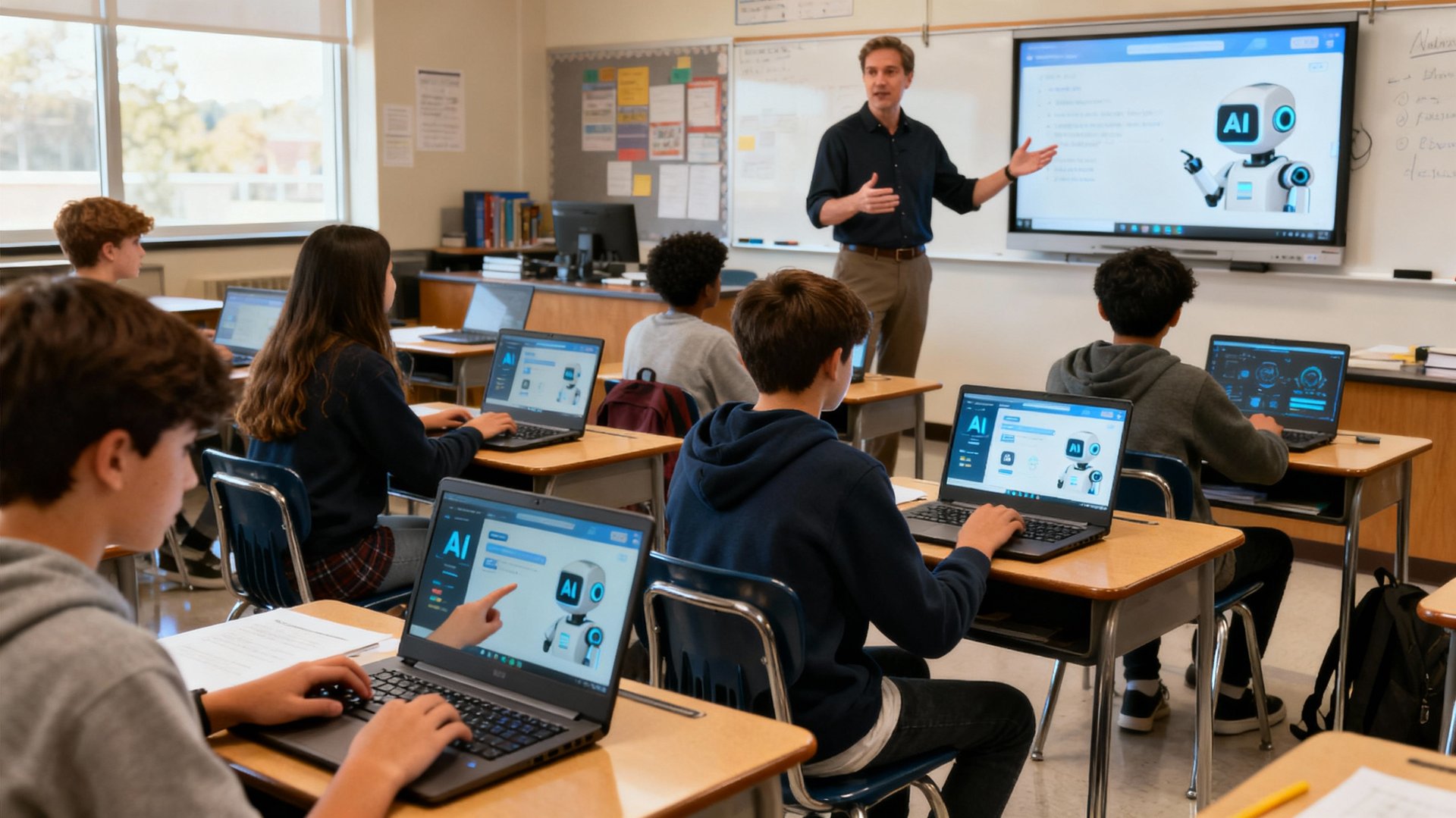
Artificial intelligence entered the world of education in a way that left no room for return. The very first question echoing in classrooms, teachers' lounges, and administrative halls is:
Is the use of artificial intelligence in education a Pandora's box that will ruin the learning process, or a transformation that will finally make equal opportunity possible?
Olli-Pekka Heinonen, Director General of the International Baccalaureate (IB), stands at the very center of this debate. According to Heinonen, artificial intelligence is not merely a new technological tool; it is a societal turning point that compels us to reshape education from the ground up. In this article, we examine that turning point through the eyes of both an expert and a human being.
Not Banning, But Teaching
When ChatGPT and similar generative AI tools first entered our lives, the initial reflex of many educational institutions was to "ban" them. IB, under Heinonen's leadership, chose a different path: learning together.
This choice is no coincidence. If the fundamental purpose of education is not to raise "robots that know the right answer," then banning artificial intelligence is not a solution — it merely deprives students of this new technology. The real issue is the student's ability to ask the right question of AI and to pass the answer received through a critical filter. For this reason, inquiry-based education is gaining vital importance like never before. Because accessing information is no longer the problem; evaluating, verifying, and making sense of information is becoming the essential skill.
Heinonen's approach is, in fact, a reflection of a broader pedagogical honesty. A professional world without artificial intelligence is no longer imaginable. We can prepare students for the future not by keeping them distant from this reality, but by raising them with the tools to face it.
The Teacher's New Superpower
One of the historical shortcomings of education systems has always been personalization. Expecting a single teacher to simultaneously meet the learning pace, language barriers, and areas of interest of thirty different students is both unreasonable and an excessive burden placed on their shoulders. Artificial intelligence steps in here and eases that weight of routine bearing down on the teacher.
Drafting lesson plans within minutes, analyzing student data to identify learning gaps early, reducing the bureaucratic burden in assessment processes... All of this gives teachers back their most valuable asset: the deep, human bond they can build with their students.
Heinonen offers a clear response to those who fear that AI will replace teachers. Artificial intelligence is an invisible assistant that takes over the routine tasks draining the teacher's pedagogical energy. Guidance, inspiration, and empathy — the very essence of teaching — remain entirely human endeavors. In fact, these dimensions become even more valuable as artificial intelligence becomes more widespread.
The Effortless Learning Trap
Now let us come to the uncomfortable question:
In an age where information is this easily accessible, should learning still be a process that requires effort?
Heinonen's warning about "effortless learning" gains its significance precisely at this point. When a student receives a ready-made text from AI, they do not merely steal a grade; they also lose the opportunity to truly internalize that knowledge and genuinely wrestle with it. Research shows that AI-assisted content generation can increase the risk of plagiarism and superficial learning; however, it also demonstrates that this risk can be managed with well-designed assessment frameworks.
The way to deal with this risk is not to fill examination halls with stricter supervision, but to fundamentally transform the assessment system. Rather than returning to closed-book exams, Heinonen highlights project-based tasks, process-oriented assessment, and activities that require students to narrate their own thinking journey. In such a structure, using AI as a "copying tool" becomes meaningless; instead, it transforms into a research partner.
While the traditional understanding of assessment focuses on the outcome, this new approach makes the process itself visible. A system that measures how a student thinks, how they synthesize information, and which path they take closes the doors that AI has opened to copying.
Trust Erosion and Digital Loneliness
Perhaps the least discussed, yet most critical risk:
Artificial intelligence targets not only our minds but also our emotions.
Deepfake content and algorithmic disinformation are shaking the foundations of social trust. Education can no longer be content with teaching only mathematics or literature; media literacy, the art of distinguishing truth from falsehood, must be moved to the very center of the curriculum.
The even deeper problem lies in the emotional bonds young people form with "human-like" chatbots. The sense of loneliness that became more pronounced during the pandemic can position an AI that is always there and never judgmental as a "best friend." This relationship carries with it the risk of social skills atrophying and psychological dependency. According to Heinonen, this is the darkest corner of Pandora's box. Technology was developed to bring us closer to one another, yet the danger of it becoming a tool that dehumanizes people is, unfortunately, real.
Inequality: Opportunity or Leverage?
The greatest promise of artificial intelligence in education is equal opportunity. Imagining an "AI mentor" for every student — one that lets them learn at their own pace, receive content in their own language, and offers personalized guidance — is no longer science fiction. Inequalities rooted in geography, economic conditions, or school quality could be overcome through this potential.
But this picture has a dark side as well. If access to AI tools remains exclusive to well-equipped schools and affluent families, the digital divide will deepen. The very tool expected to eliminate inequality could, on the contrary, turn into a lever that reinforces it. For this reason,
the integration of artificial intelligence into education is not merely a pedagogical matter; it is simultaneously a matter of justice and policy.
Conclusion: We Are Still at the Very Beginning of the Marathon
The artificial intelligence revolution in education is a marathon, not a sprint. We are currently at the very beginning of this long road, and we do not yet know exactly what we will gain from it.
Neither blindly glorifying technology nor fearing it unnecessarily will take us where we need to go. The real matter is,
designing how we will use this tool in an ethical, human-centered, and equitable way.
The future of education is not hidden in silicon chips, but in how much those chips can liberate human potential.
Artificial intelligence can either ruin or transform education. Which it will be depends largely on the choices we make.
Frequently Asked Questions (FAQ)
Will artificial intelligence replace teacher
No — on the contrary, it will "liberate" them. By taking over time-consuming tasks such as paperwork and routine planning, AI will give teachers back the time they need to guide and inspire their students.
How can we prevent students from using artificial intelligence to cheat?
By transitioning away from assignments that focus solely on the outcome, toward methods that evaluate the process. Projects that measure how a student "thinks" and "synthesizes knowledge" render cheating meaningless.
Is it safe to use artificial intelligence in education?
Risks related to data privacy and disinformation do exist. This is why it is essential for schools to incorporate not only the use of the tool itself, but also "ethical AI literacy" and "media analysis" into their curriculum.
Why did IB not ban artificial intelligence?
Because IB prepares students for the real world. A professional world without AI is no longer conceivable; therefore, the most sound pedagogical approach is not to ban it, but to teach students how to use it critically.
Can artificial intelligence end inequality in education?
It has the potential — but it comes with risks. If only well-resourced schools gain access to these tools, the gap will widen. However, with the right policies, providing every student with a personalized "AI mentor" could be revolutionary for equal opportunity.